Case study · Short Cut Food Suppliers
From notebook orders to a cloud POS serving three towns.
A pre-cut and pre-washed vegetable supplier in Sabaragamuwa was running the whole business on phone calls, WhatsApp messages and a notebook. We built the system that replaced all of it — and it runs the business today.
- Client
- Short Cut Food Suppliers
- Sector
- Food supply & delivery
- Region
- Sabaragamuwa, Sri Lanka
- Scope
- Storefront · Orders · POS
The problem
Every order passed through one person’s memory.
Orders arrived as phone calls and WhatsApp messages, then were copied into a notebook by hand. The catalogue lived as photos posted to Facebook whenever someone remembered to post them.
Payments were the worst of it. Customers transferred money to a bank account and the owner chased each slip individually to work out who had actually paid. Stock was tracked from memory. There were no reports at all — no way to know which products made money or which zone was worth delivering to.
| Before | After |
|---|---|
| Phone calls and WhatsApp, copied into a notebook | 24/7 self-service store with cart and accounts |
| Photos posted ad hoc to Facebook | Structured catalogue with search and filters |
| Chasing bank slips one by one | Slip upload with a verification queue |
| Stock tracked from memory | Live stock tied to orders |
| Bulk discounts worked out by hand | Automatic 5% discount at 25+ items |
| No reports at all | Sales, product and zone reporting |
The solution
One system, five moving parts.
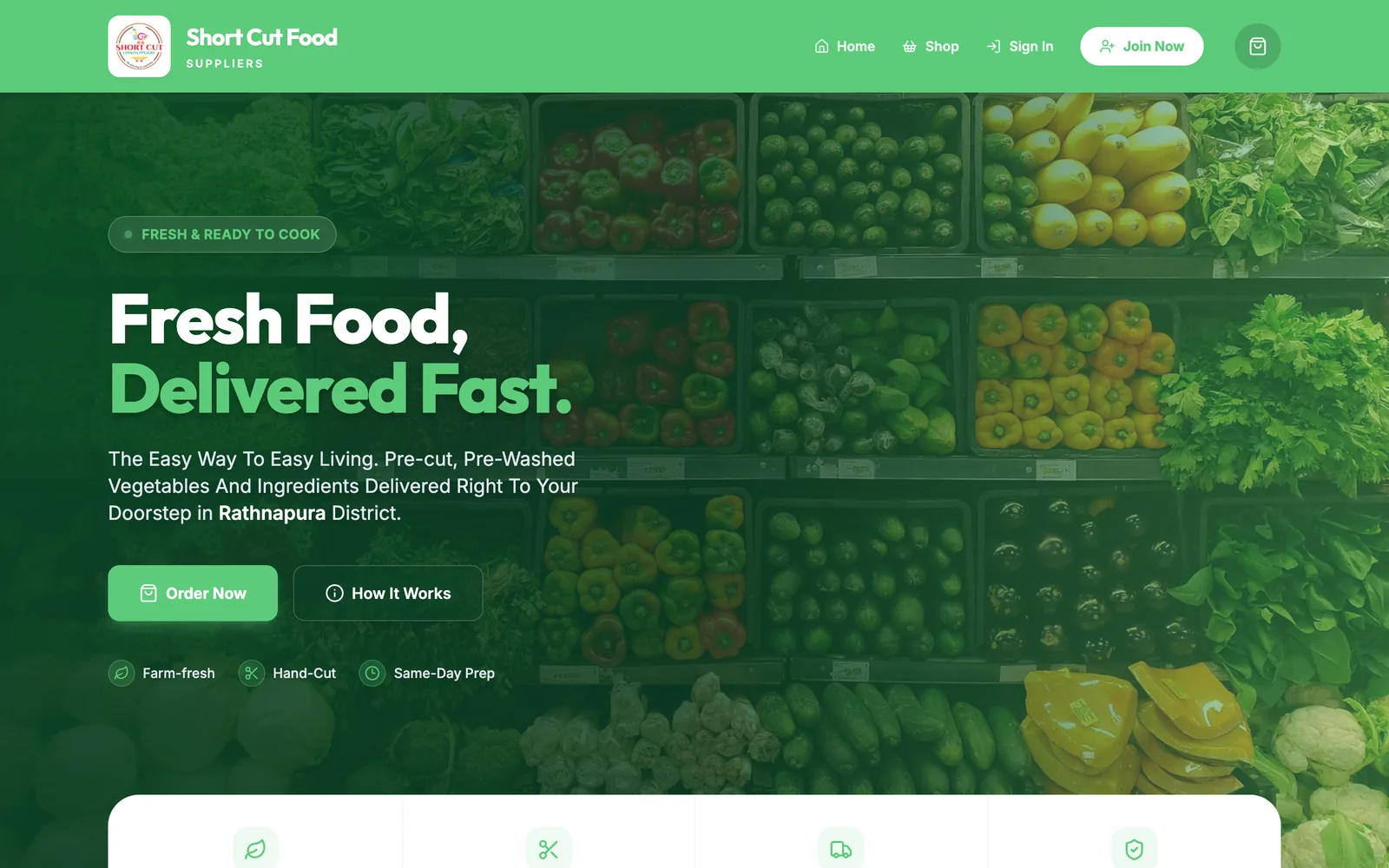
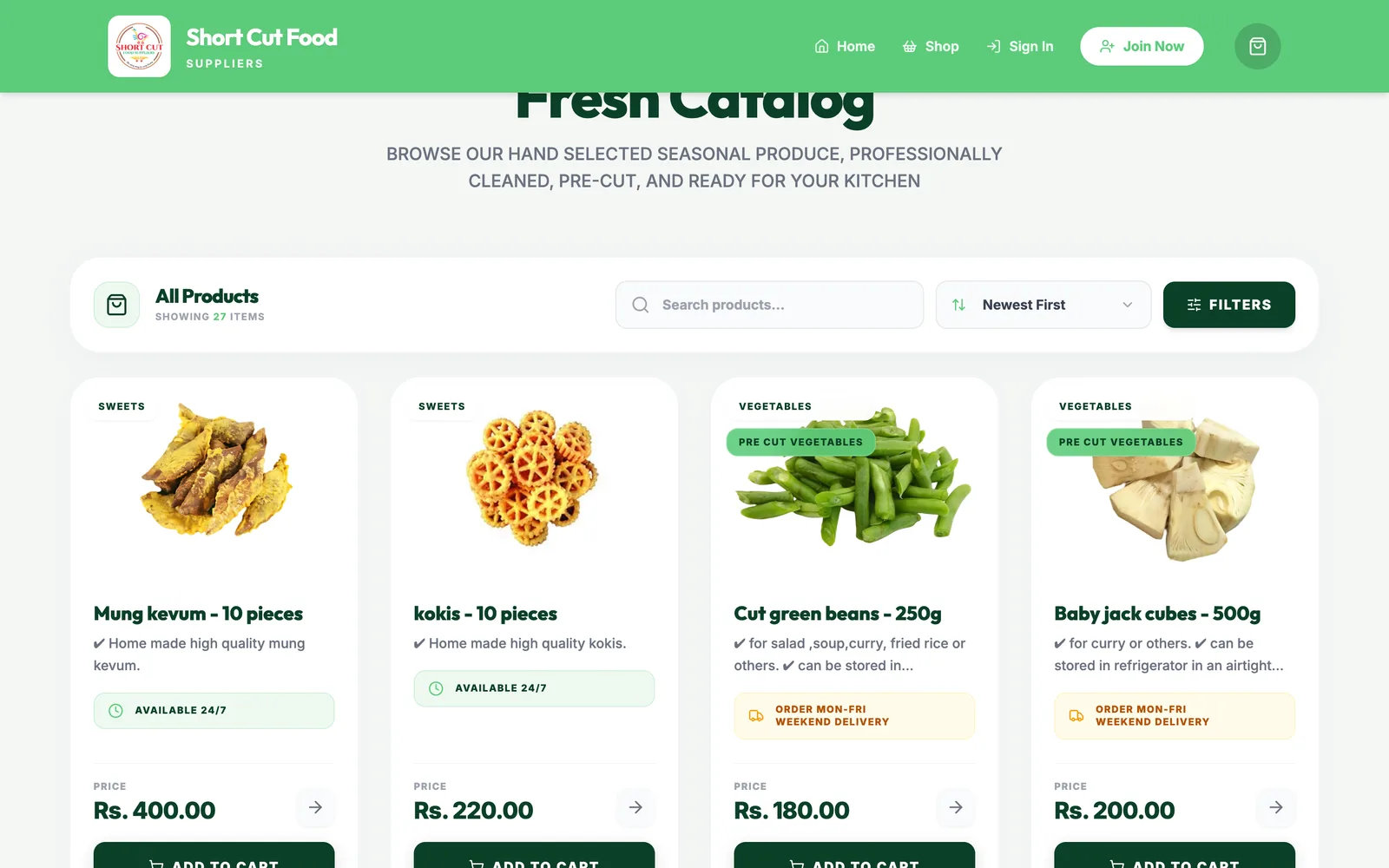
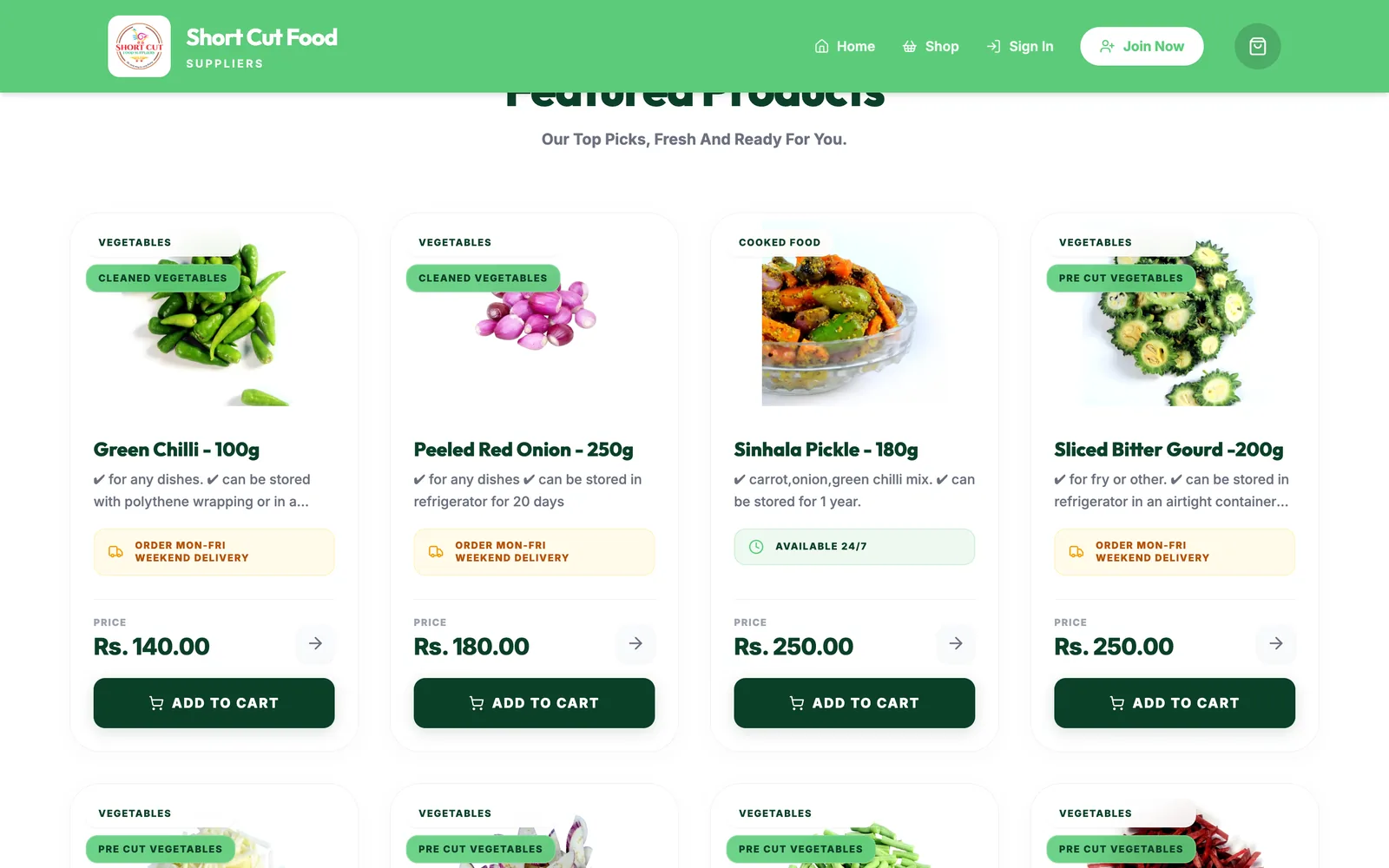
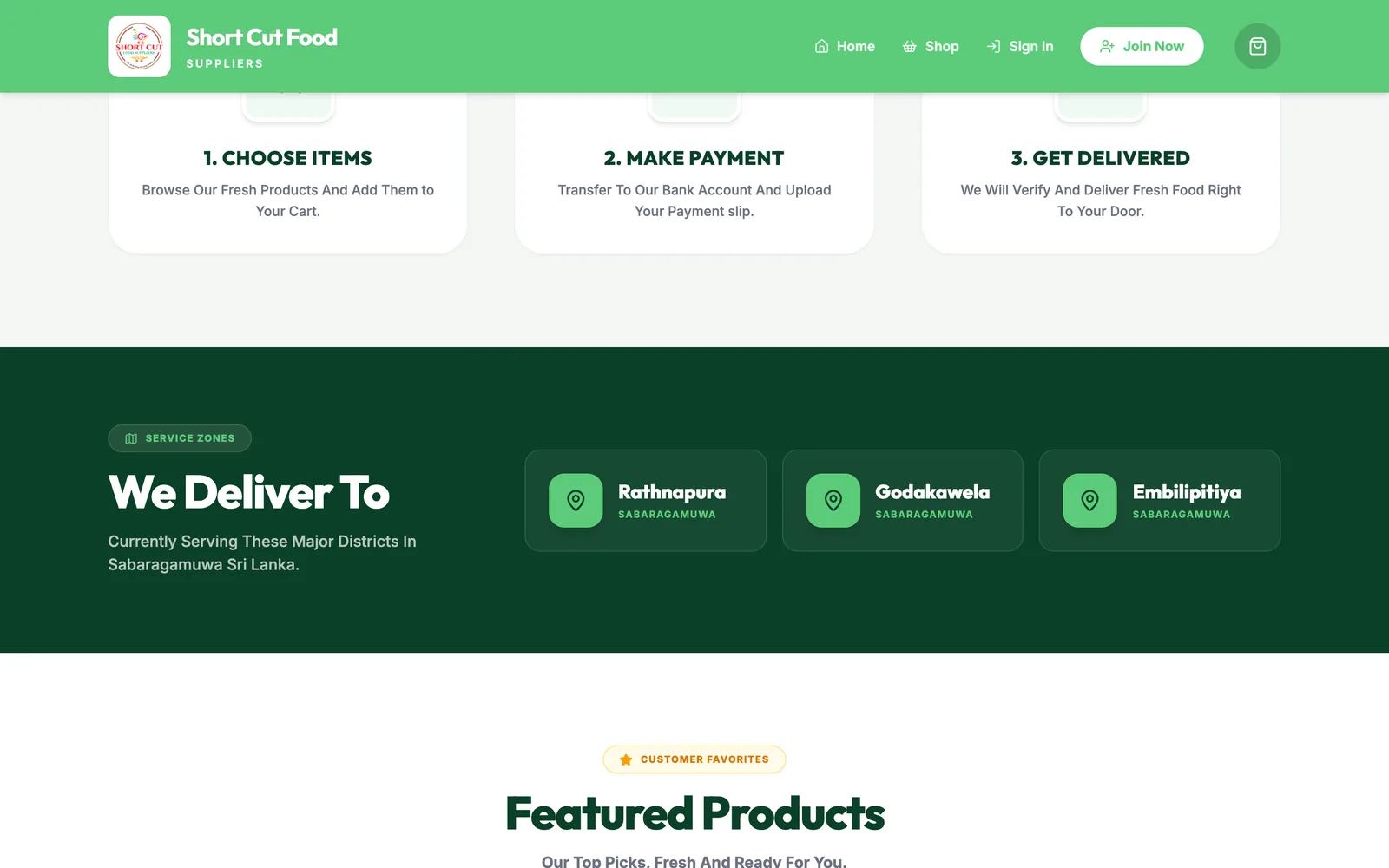
Architecture
How the pieces fit together.
Nothing here is unusual, and that is the point. It is a boring, legible architecture that a second engineer could pick up without a handover meeting.
Engineering decisions
The choices that actually mattered.
01
Bank transfer with slip upload — not a card gateway
Customers pay by bank transfer and upload a photograph of the slip. Staff verify it from a queue, and the order moves forward once it clears.
Why: Card penetration is low in rural Sri Lanka and gateway fees would come straight out of thin margins on vegetables. Forcing cards would have cost the client customers. We matched the flow customers already used, and made the messy part — reconciling who paid — the thing the software does.
02
Bulk discount as a rule, not a coupon
Buy 25 items or more and 5% comes off the whole cart automatically. There is no code to enter and nothing for staff to apply by hand.
Why: The discount was already the client’s policy, applied inconsistently by whoever took the order. Encoding it as a rule made it accurate every time and turned it into something the storefront could advertise up front.
03
Ordering windows attached to the product
Products carry their own availability — some are order Monday to Friday for weekend delivery, others are available 24/7.
Why: Fresh pre-cut produce has a real preparation schedule. Putting the window on each product stops customers ordering things that cannot be cut and delivered in time, which is a refund and a lost customer rather than a support ticket.
04
Storage guidance shipped as catalogue content
Each item states how it should be kept and for how long — refrigerated, airtight, vacuum-packed, and the number of days.
Why: The single biggest complaint risk for pre-cut vegetables is food that spoils before it is used. Answering it on the product page prevents the complaint instead of handling it afterwards.
05
Delivery zones stated on the storefront
The served areas are named on the site rather than discovered at checkout.
Why: Customers outside the zone self-qualify before they order. That removes the most common wasted conversation the client was having on the phone.
Results
What changed for the business.
—
Orders per week
—
Admin hours saved each week
—
Order errors
These stay empty until the client confirms the figures. We would rather show you nothing than show you a number we made up — and everything else on this page you can verify yourself on the live site.
A client testimonial will appear here once we have it in writing. We don’t paraphrase clients.
Built with
The stack.
- Responsive web front end
- WebP-optimised media
- Server-rendered catalogue
- Structured product data
- Cloud hosting
- Customer accounts
Questions
What people ask about this project.
- Can I see the system working?
- Yes. shortcutfood.com is live and you can browse the catalogue, add items to a cart and go through checkout exactly as a customer would.
- How long does a system like this take?
- It depends on how much of your process is already written down. We scope it properly first and give you a fixed timeline before any code is written, rather than an optimistic guess on a phone call.
- Can it work for a business that isn’t food?
- Yes. The parts underneath — catalogue, orders, payments, stock, POS, reporting — are the same for retail, wholesale and pharmacy. What changes is the layer on top: barcodes and label printing for retail, batch and expiry tracking for pharmacies, credit ledgers for wholesale.
- Do we own the system?
- Yes. You own your data and can export it at any time. We do not hold a business hostage to keep it on a support contract.
- What happens after launch?
- We keep it running — updates, backups, security patches and small changes — under a maintenance arrangement agreed up front, and a human answers on WhatsApp.
Run a food, retail or delivery business? You can have this system.
The same architecture, fitted to your trade. Tell us how you take orders today and we’ll tell you what it would take to replace it.